
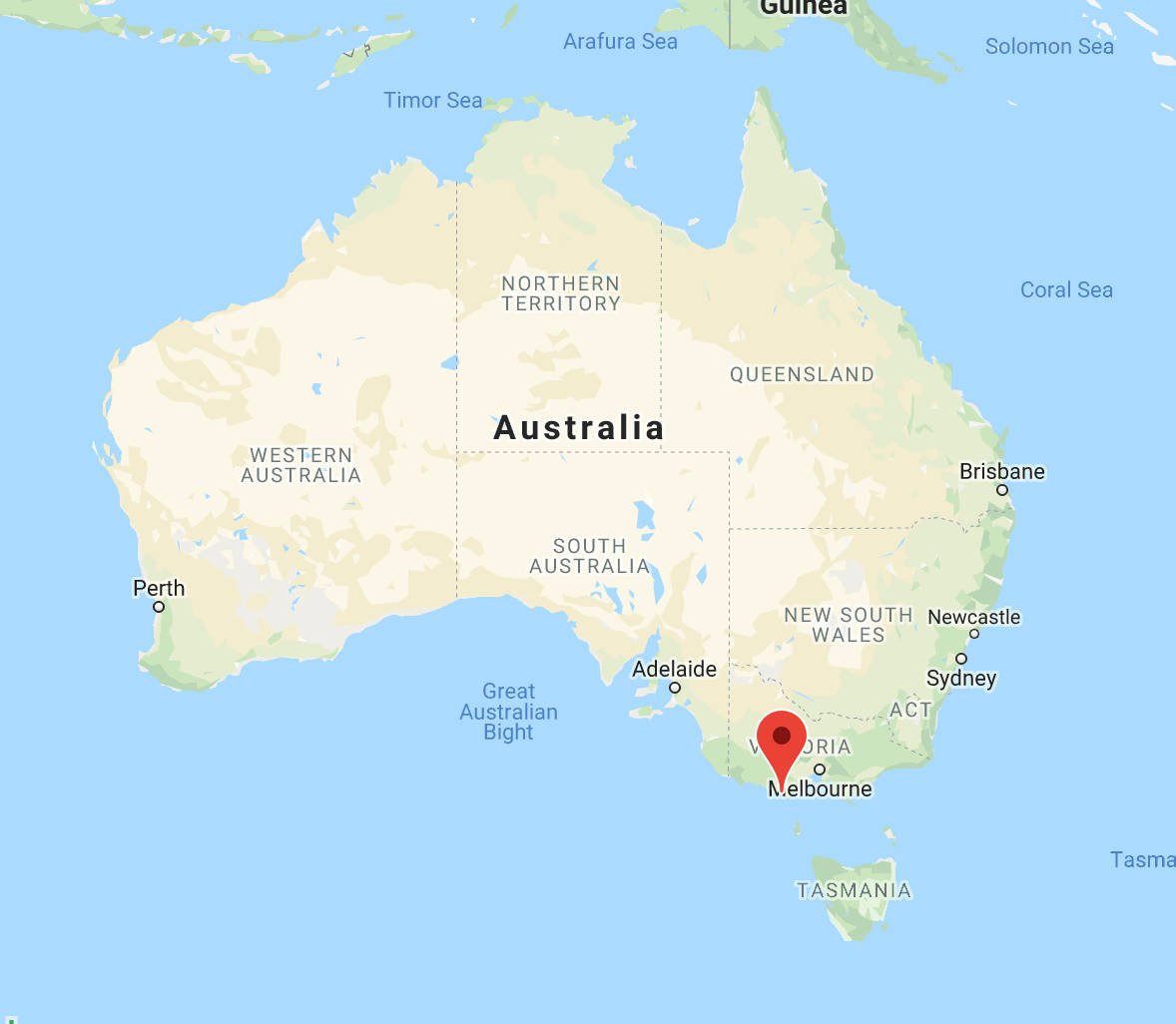
Great_Ocean_Rd_Australia
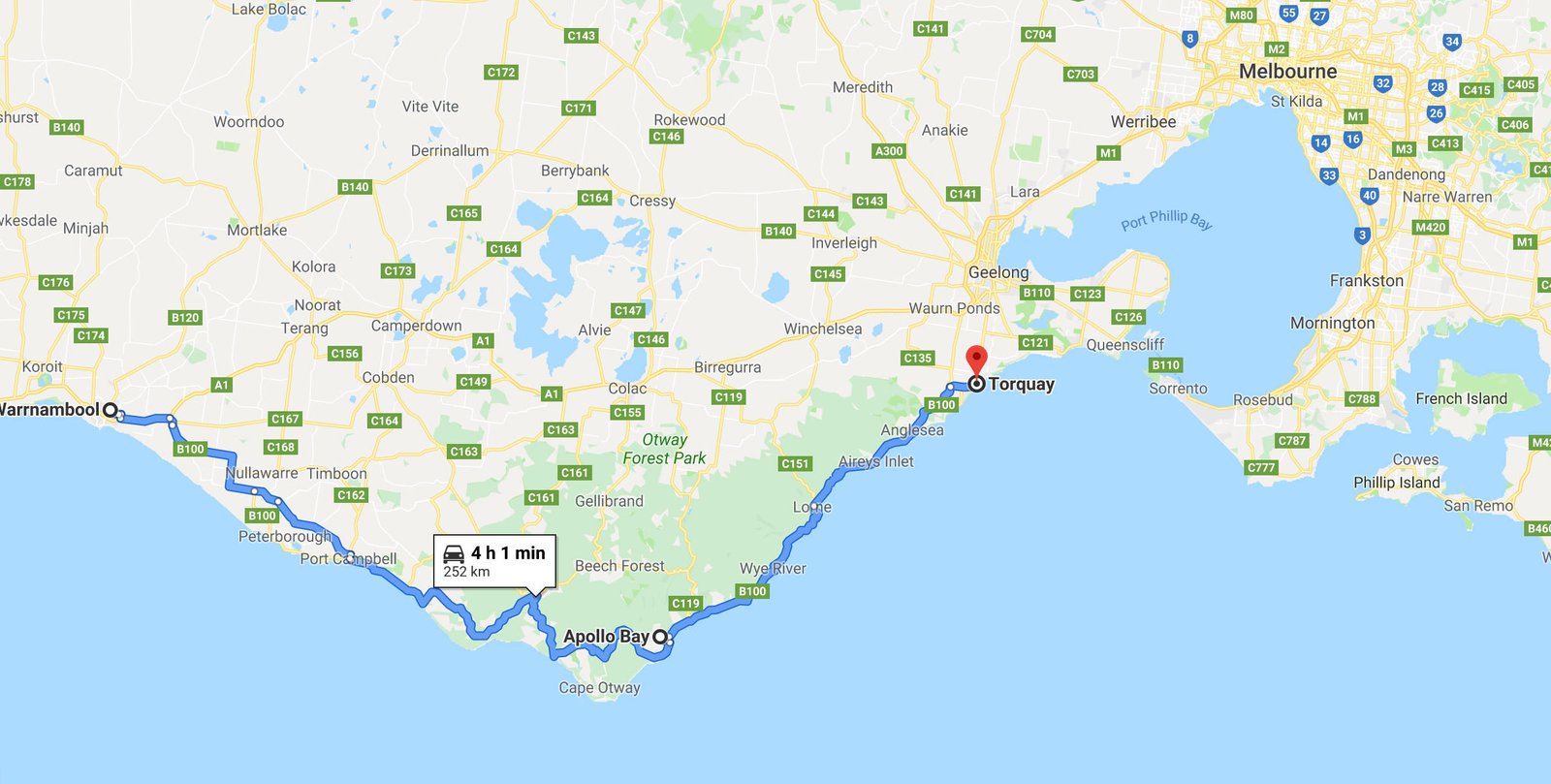
Great-Ocean-Rd-Map-Large
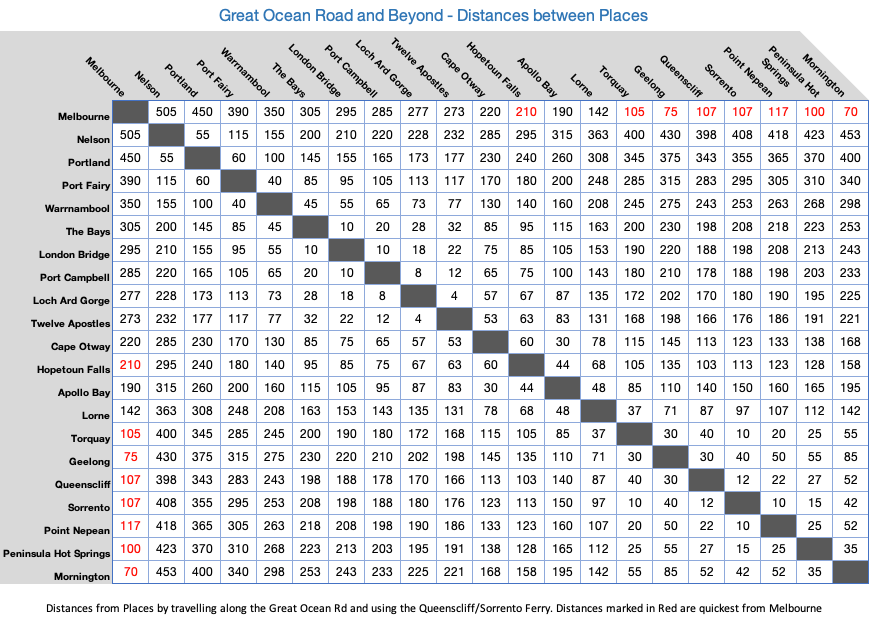
Great Ocean rd Distances
The Great Ocean Road is a very popular tourist destination in Victoria.
It starts at the beachside town of Torquay and finishes after 230Km just to the east of Warrnambool. It officially is known as B100.
It takes you from the beaches of Torquay, the famous “Bells Beach” surfing beach, Anglesea, and Aireys Inlet to the ruggedness of the cliff coastline of Port Campbell Marine Park.
There is so much to see and do along this road, that you need a few days to soak it all in. If you plan on seeing it in a day it (not advised), you will undoubtedly see the famous ‘Twelve Apostles’. However if you stay overnight or a few days, you will be richly rewarded by the discoveries you make in this region. Give the chance for this timeless coastline to seep into you consciousness and you will love it forever.
Places to stay along this coastline are Lorne and Port Campbell, and if you stay longer you may wish to include a favourite spot along the coastline from Apollo Bay to Wye River.
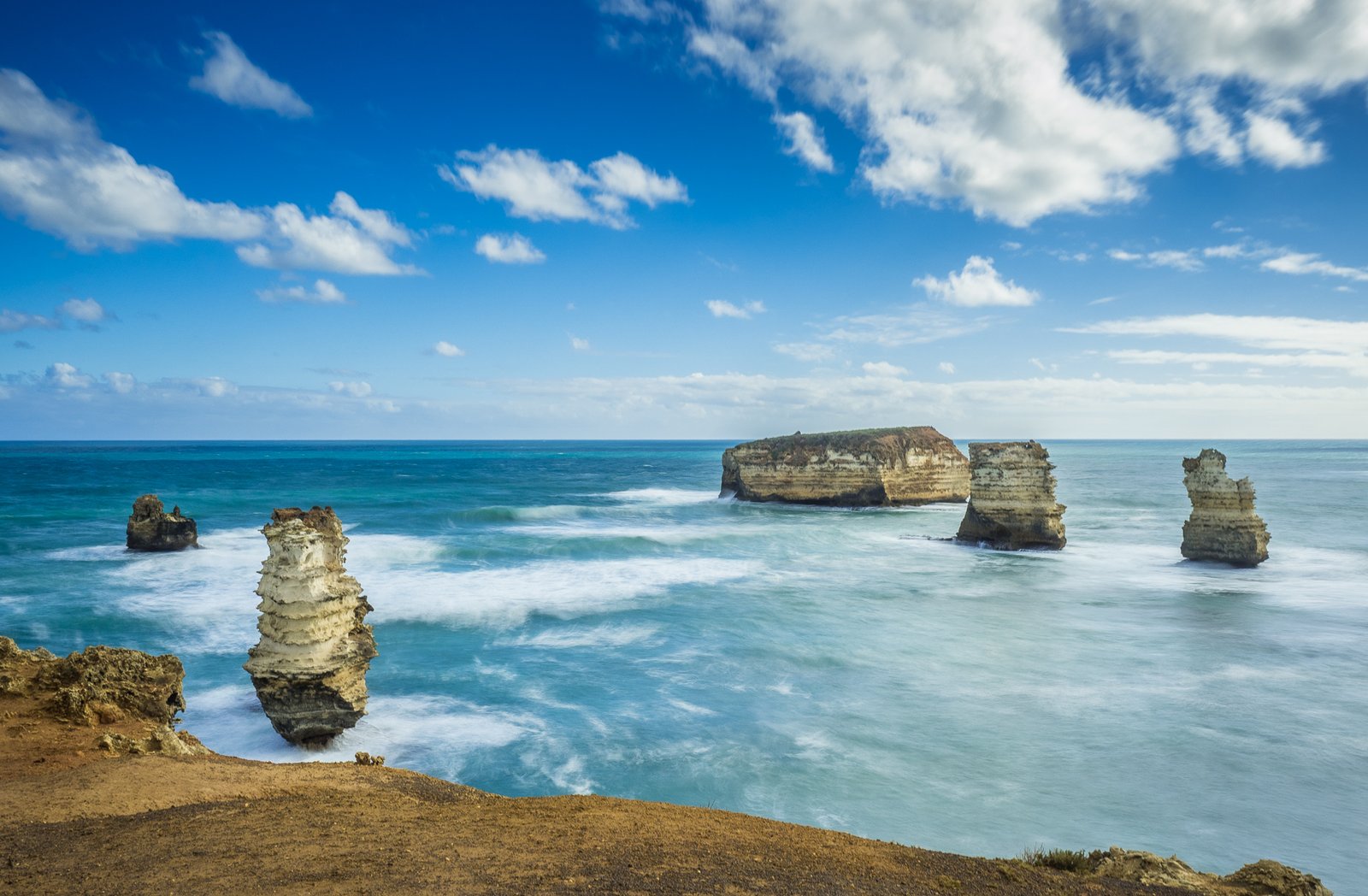
Bay of Islands
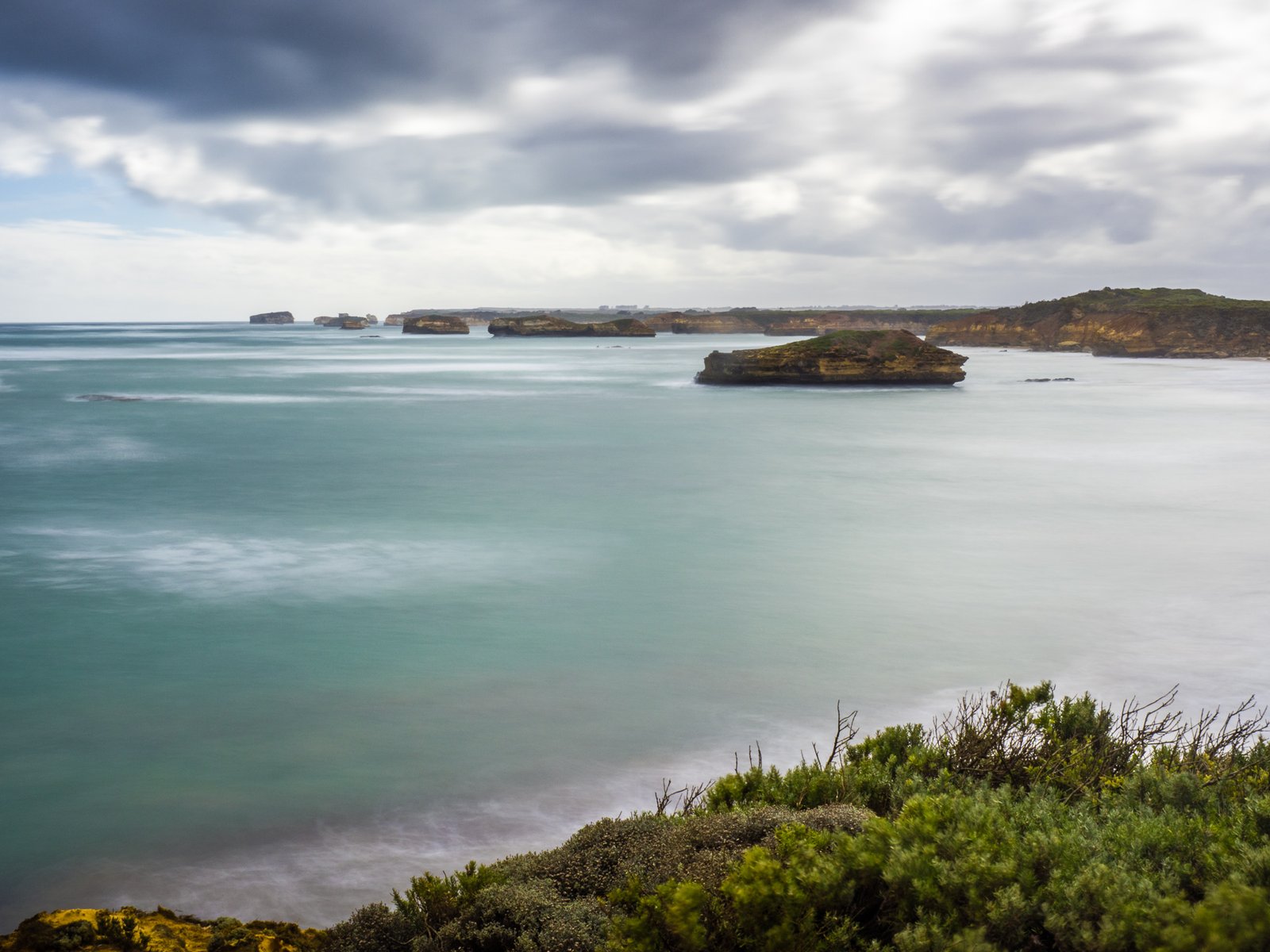
Bay of Matyrs
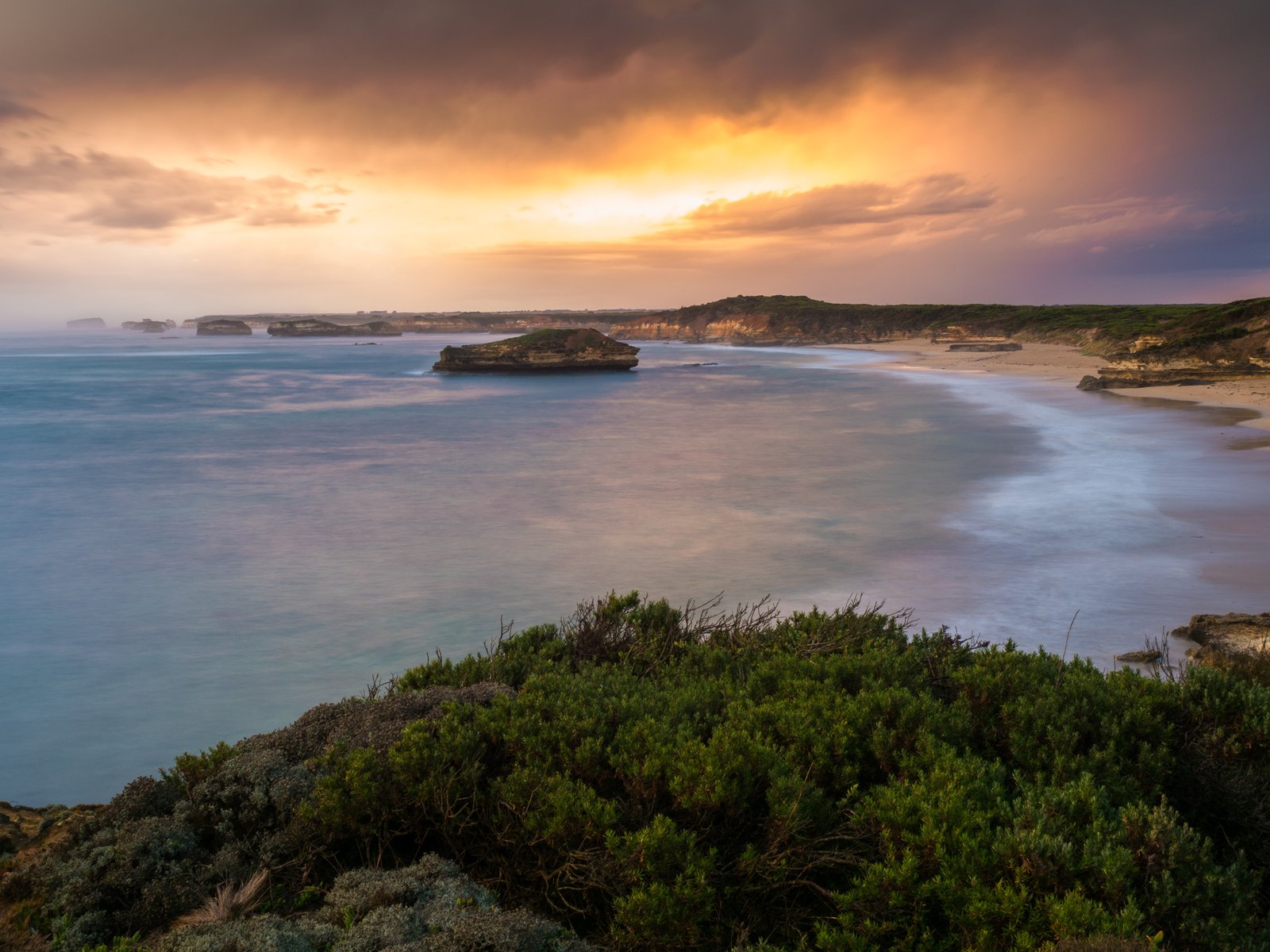
Bay of Matyrs
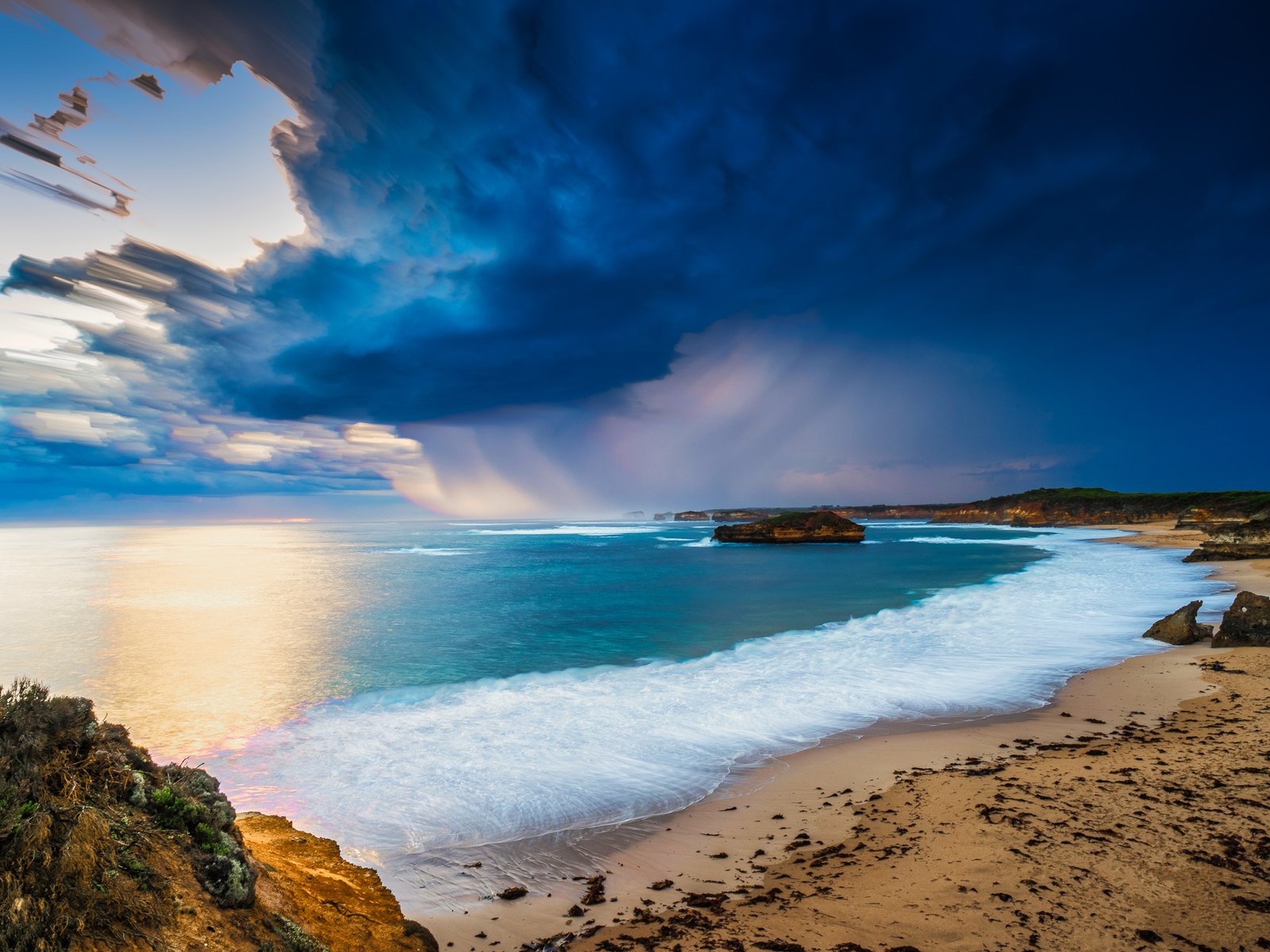
Bay of Matyrs
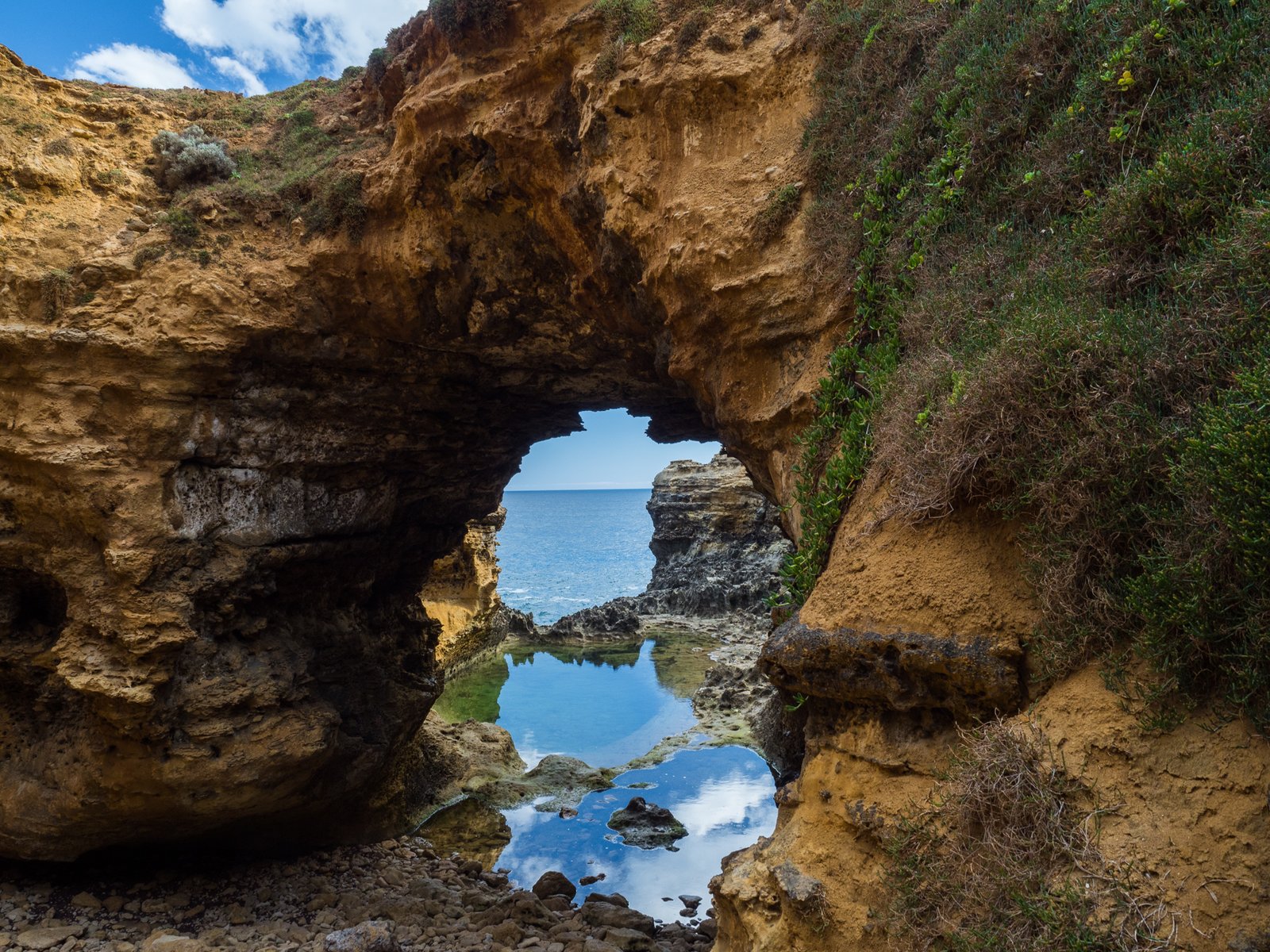
The Grotto
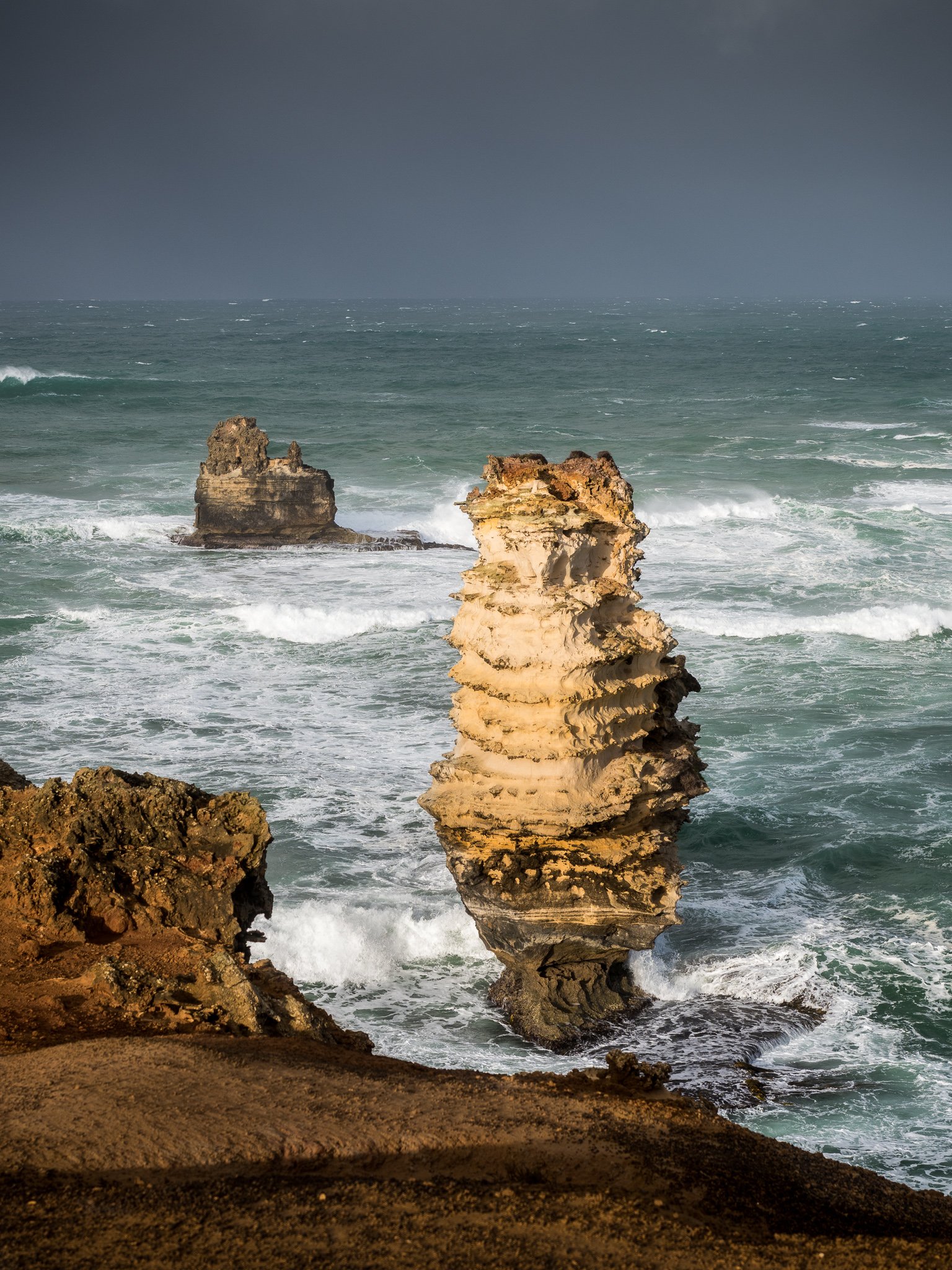
Bay of Islands
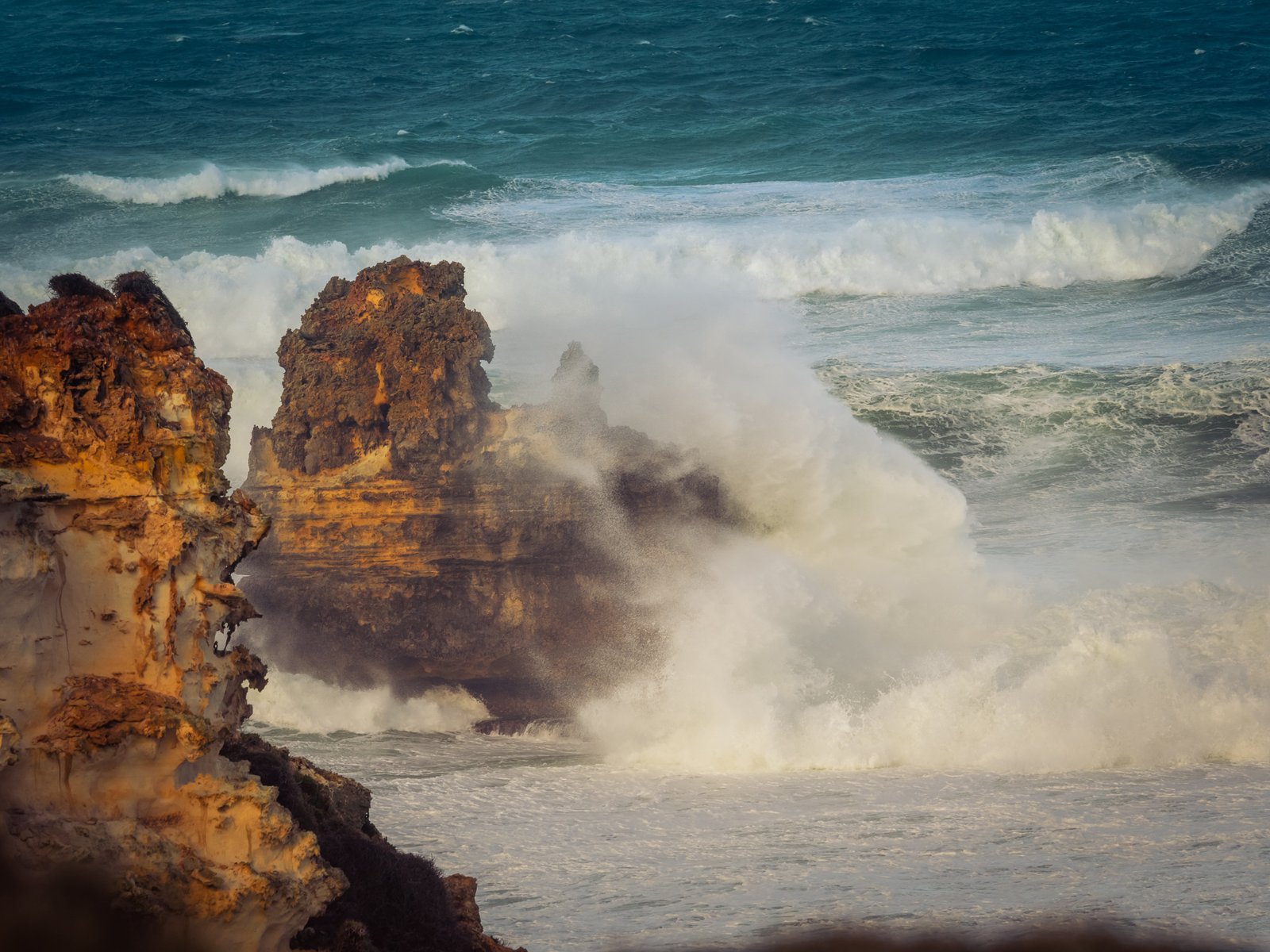
Bay of Islands
Port Campbell
This small town on the Great Ocean Road is an ideal place to stay to view the spectacular Twelve Apostles and the other features of:
- Bay of Matyrs
- Bay of Islands
- London Bridge
- The Arch
- Loch Ard Gorge
Port Campbell is the only place of refuge along this rugged coastline for small vessels. It has a small crayfishing industry but it’s main industry is tourism as all the landmark sea views are within 20km. During peak season it is essential to book.
At the Rocks Beach Bar Cafe you can sit down and admire the view of the small harbour in comfort as you dine. I visit there every time I go to Port Campbell as I never tire of the view. Quality meal at reasonable prices, and friendly atmosphere. Be sure to check the pictures of the Twelve Apostles above the windows. On a nice day you can site outside under their pergola. Be sure to book ahead for dinner if you want to have a window seat.
The caravan park is located near the harbour, but is well protected from wind by a tree break. The staff there are friendly and helpful.
There are many types of accomodation ranging from motels, bed and breakfast’s and apartments. They are nearly always in short supply as the region has so many visitors, so you need to plan early and book.
For budget accomodation there is a shared accomodation place (you have a bedroom and shared facilities) called the Flash Packers. I have stayed there as I passed through once intending to stay in my tent but a storm was heading through with 90kmh winds. I decided that I needed more substantial accomodation and Flash Packers was the only place that had room. It’s a nice way to meet people and discuss your travelling experiences.
Port Campbell is a must place to stay. Use it as a base to experience the rugged coastline of the Great Ocean Road.
Bay of Matyrs
My personal favourite is the Bay of Matyrs. You have a magnificent panorama of the coastline with the Bay of Islands viewable in the distance. If the sea is calm enough, I suggest that you walk down to the beach and experience the power of the ocean.
On windy days you can see many seagulls at the Bay of Matyrs, riding the updraft along the cliff face. This is a common occurrence as there are many windy days along the entire Great Ocean Road. The Bay of Matyrs is best viewed at sunset.
Bay of Islands
The Bay of Islands has small pinnacles to large lumps of rock stand against the force of The Southern Ocean.
Not many people visit this site compared to the the Twelve Apostles – the viewing platforms are small and only around 30 cars can park.
When calmness descends on the Bay of Islands it takes on a different personality. The rocky islands seem indestructible as they rise above the sea.
The Arch
A truly spectacular view is “The Arch”. The sea has created a classic Arch that the waves crash through. It is as though “The Roman Empire” has created this well formed masterpiece. There are two viewing platforms. I think the best view is from the top viewing platform but it is also well worth visiting the bottom platform.
London Bridge
London Bridge used to have a connecting bridge of sandstone to the mainland. On 15th January 1990 the bridge collapsed leaving 2 people stranded on the Island created; later being rescued by helicopter. This highlighted the non permanence of these structures; something that was not appreciated before this event. A reminder to us that the earth is continually changing, some noticeable and others slowly changing until a catastrophic event occurs.
It still is a spectacular site with the large southern waves crashing into it’s structure. How long until the weakened top layer crashes into the ocean?
Somehow I don’t think it will happen in my lifetime, but a future generation will be awe struck about the non permanence of these structures when the last collapse is well forgotten.
The Grotto
The Grotto is located 9km west of Port Campbell. It is an interesting formation, that is a blowhole when the weather is severe. Normally it is an interesting archway, and partly a cave. You can walk down to the bottom of the formation and you get an incredible site of viewing the horizon through the opening.
The best time to visit the formation is at Sunrise or Sunset in the Summer from the bottom deck. No matter when you visit this formation as all the formations have a certain appeal, prompting the visitor to return at many different times throughout the year and different weather conditions, to see the many varied faces of this incredible region.
Loch Ard Gorge
Not far from the Twelve Apostles on the way to Port Campbell, is the magnificent Loch Ard Gorge. It is called this due to a shipwreck in the late 19th century, where only two people survived out of 54 – Tom Pearce and Eva Carmichael both 18 years of age.. The “Loch Ard” struck a reef 1km south of this gorge, as the Cape Otway lighthouse could not be seen due to a heavy mist. Tom was swept into the gorge at dawn. Later that morning Eva was washed into the gorge. Tom rescued her battling through wreckage and heavy surf.
They sheltered in a cave at the western end of the gorge, and later Tom climbed the steep cliffs and found help from two stockmen, 5.5 Km east of the gorge. Although several bodies from the wreck were found along the coastline only four were recoverable, and they were buried west of the gorge, in a site that become a pioneer cemetery.
Tom went on to become a ships master, and Eva returned to Ireland.
You can view the gorge from the clifftops and also take a walk down to the beach. Walking down to the beach, you can see that the ocean is turbulent (most times), but the Loch Ard Gorge provides shelter from the wind and huge seas. From the picture above the sea can be seen as squeezing through the small gap and producing big waves till they finally succumb to the steep beach. It is very surprising how large the waves are yet you can stand only a few metres from the breaking waves.
Viewing from the clifftops you can see the power of the ocean, and sometimes you can even feel the ocean spray.
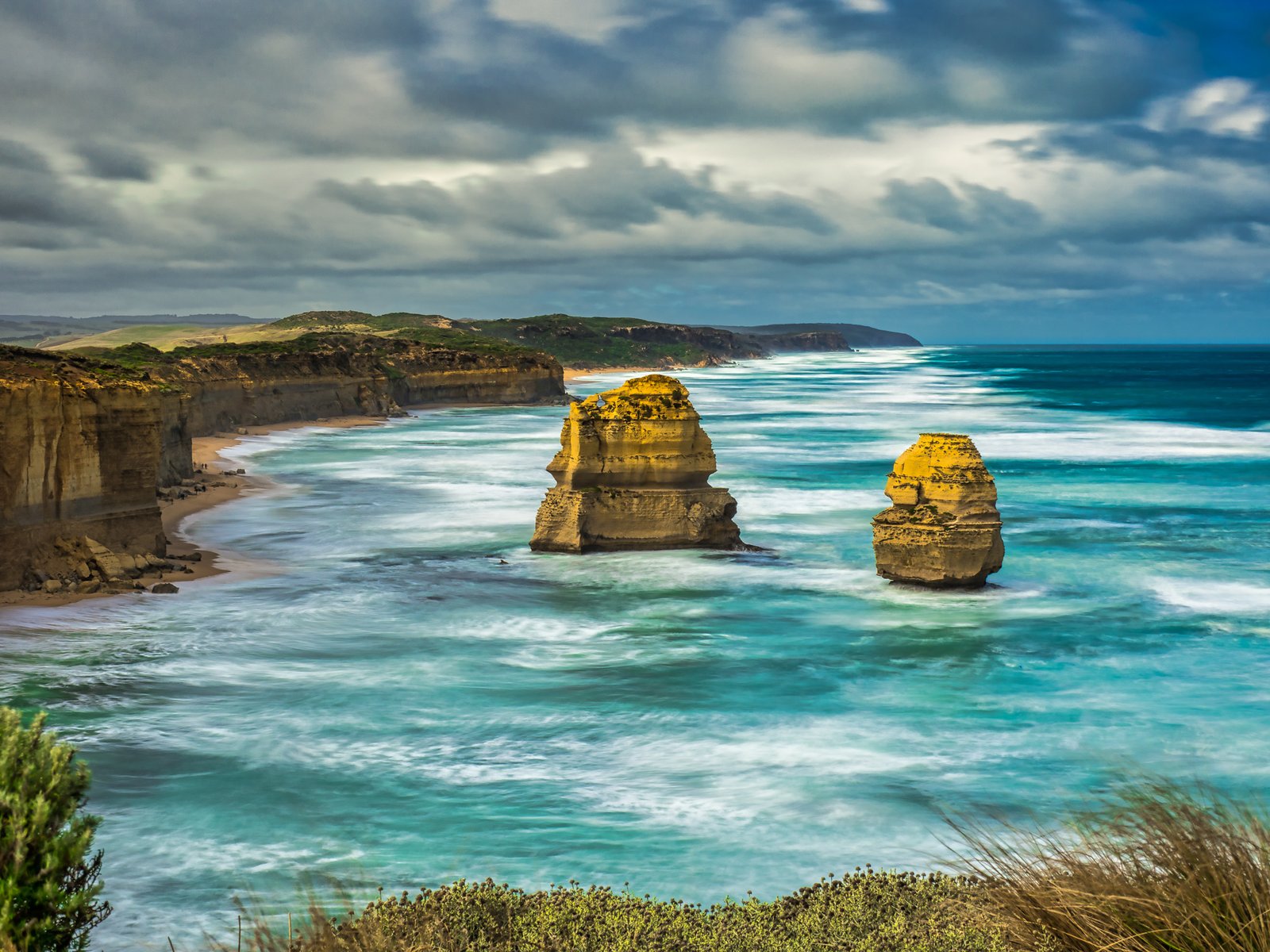
Twelve Apostles
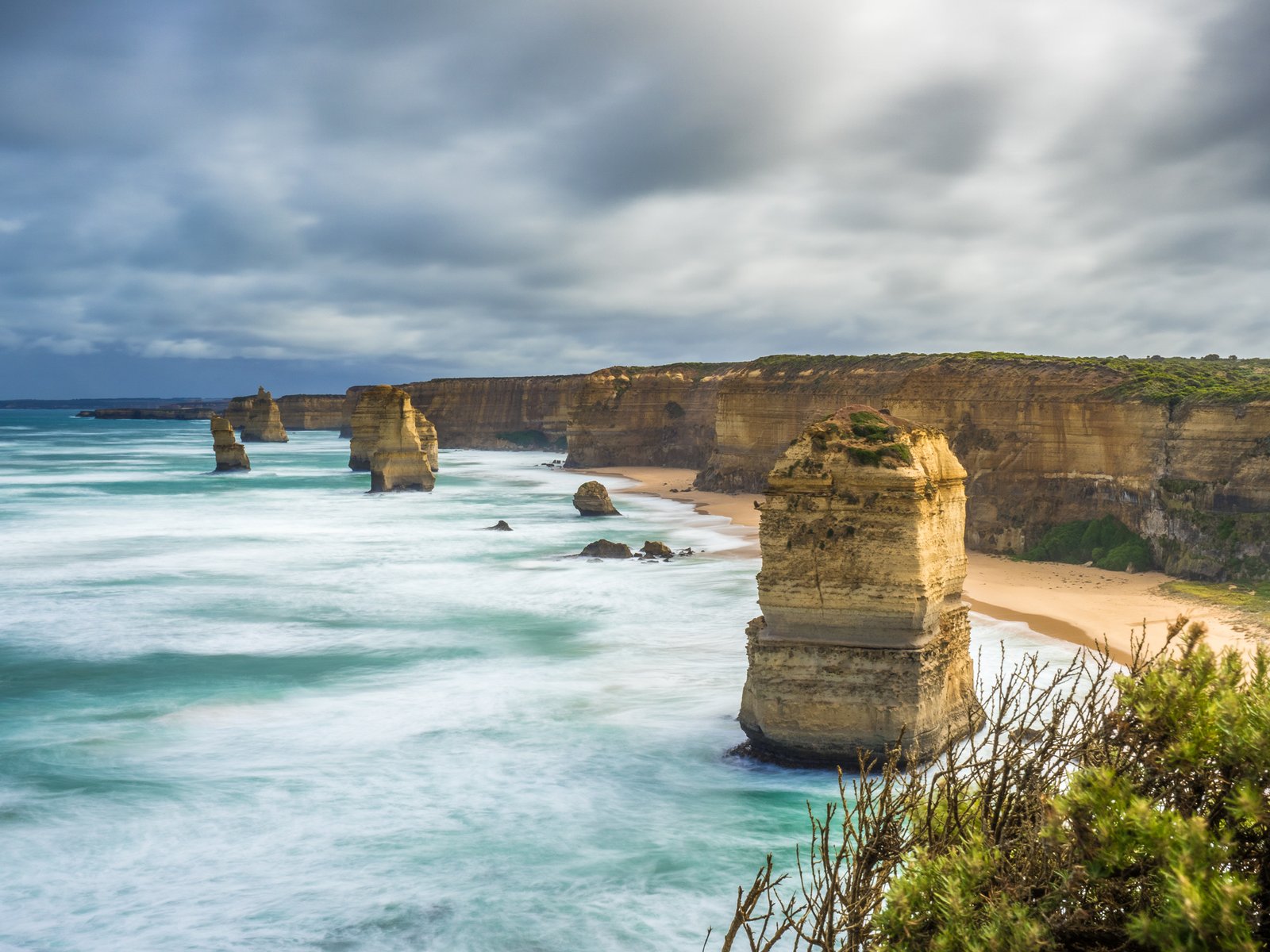
Twelve Apostles
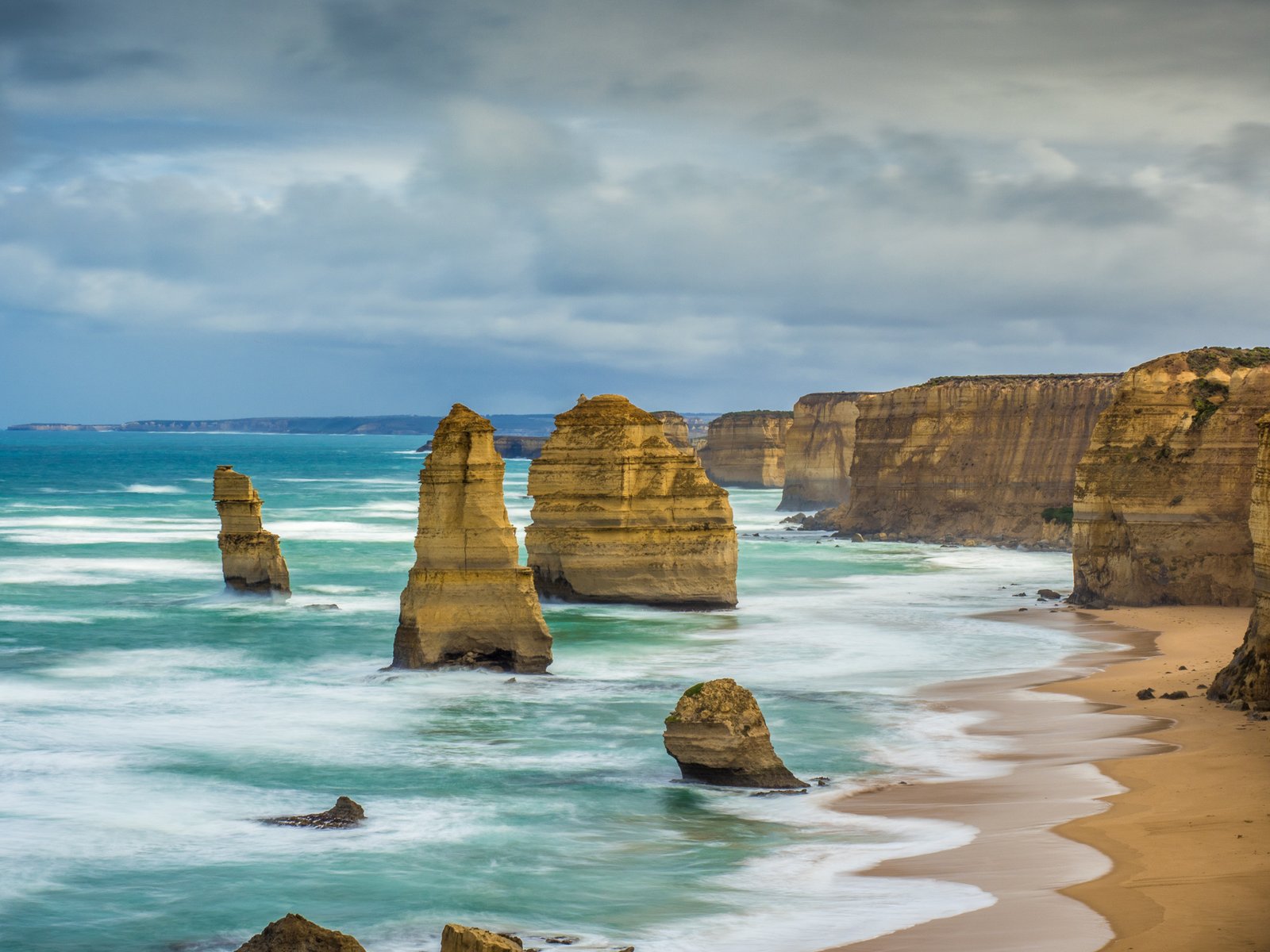
Twelve Apostles
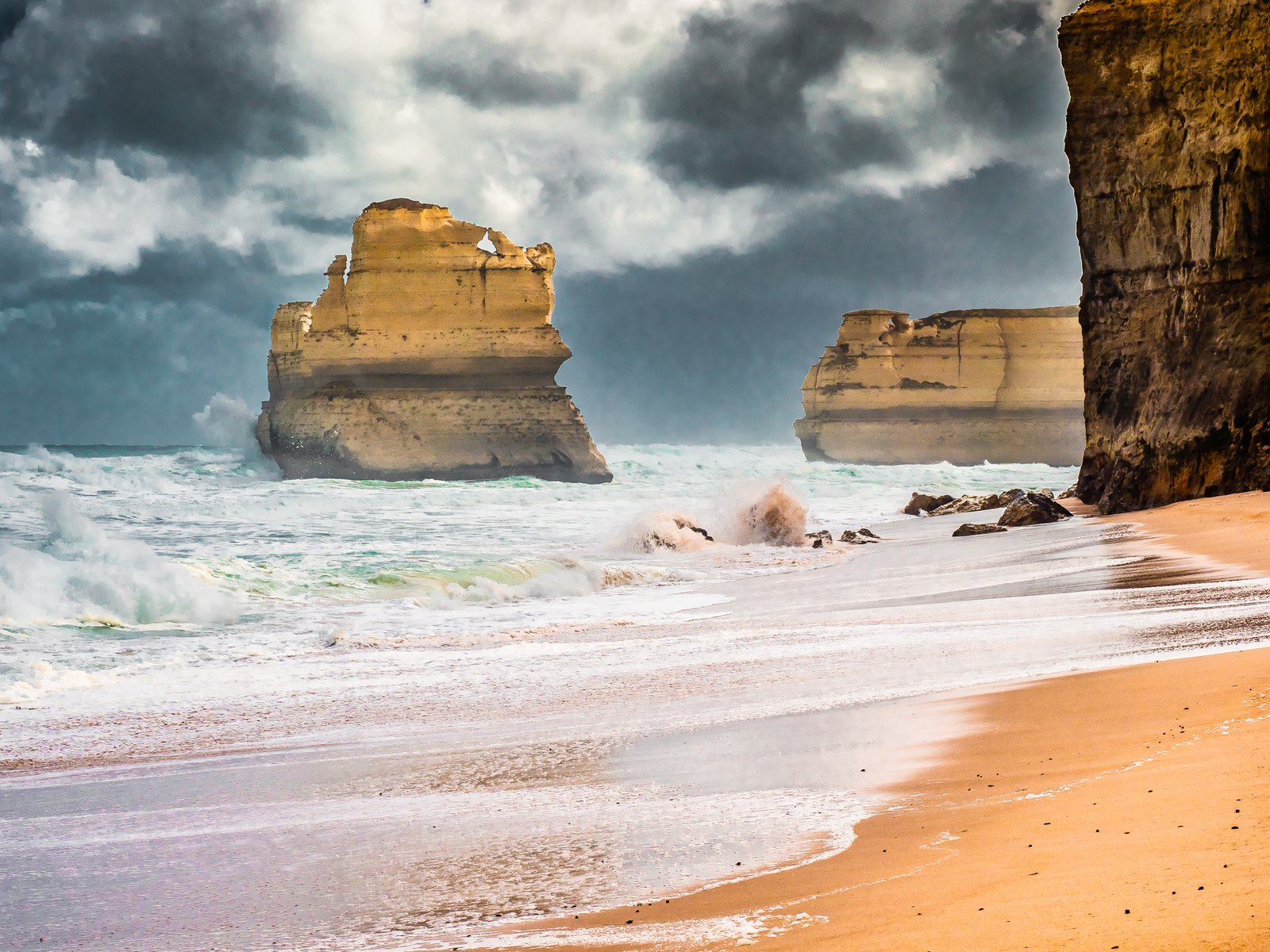
Twelve Apostles
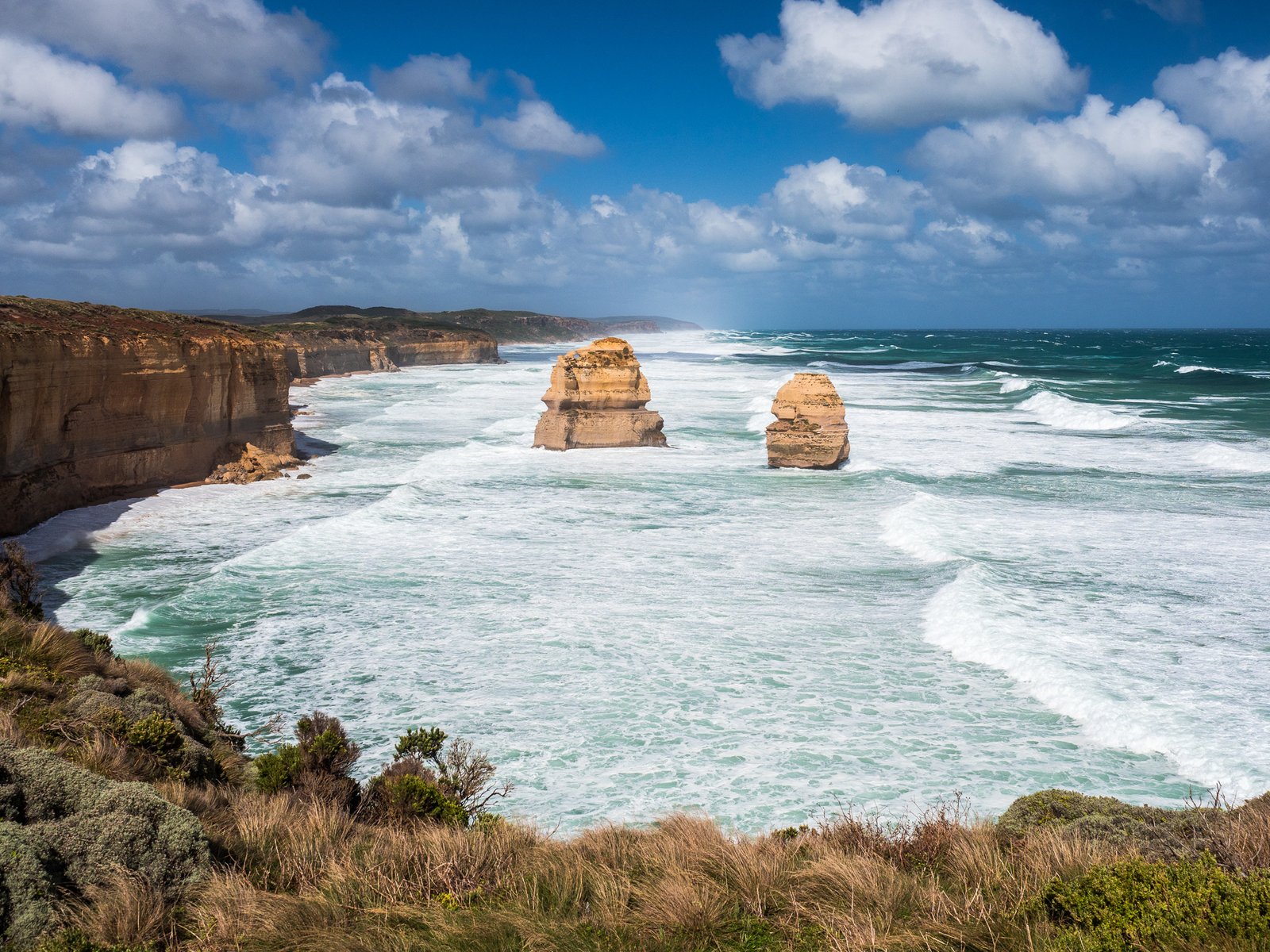
Twelve Apostles
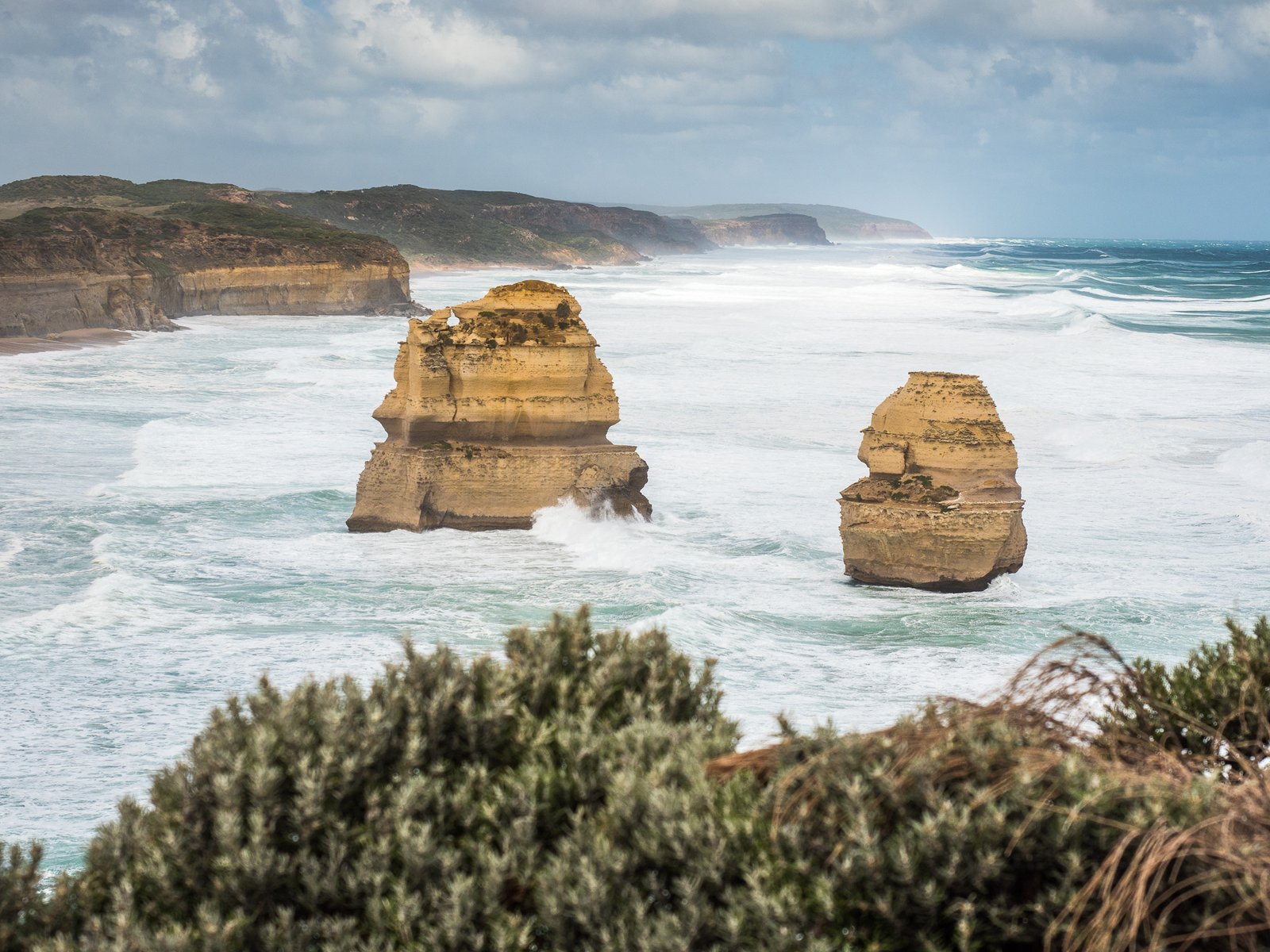
Twelve Apostles
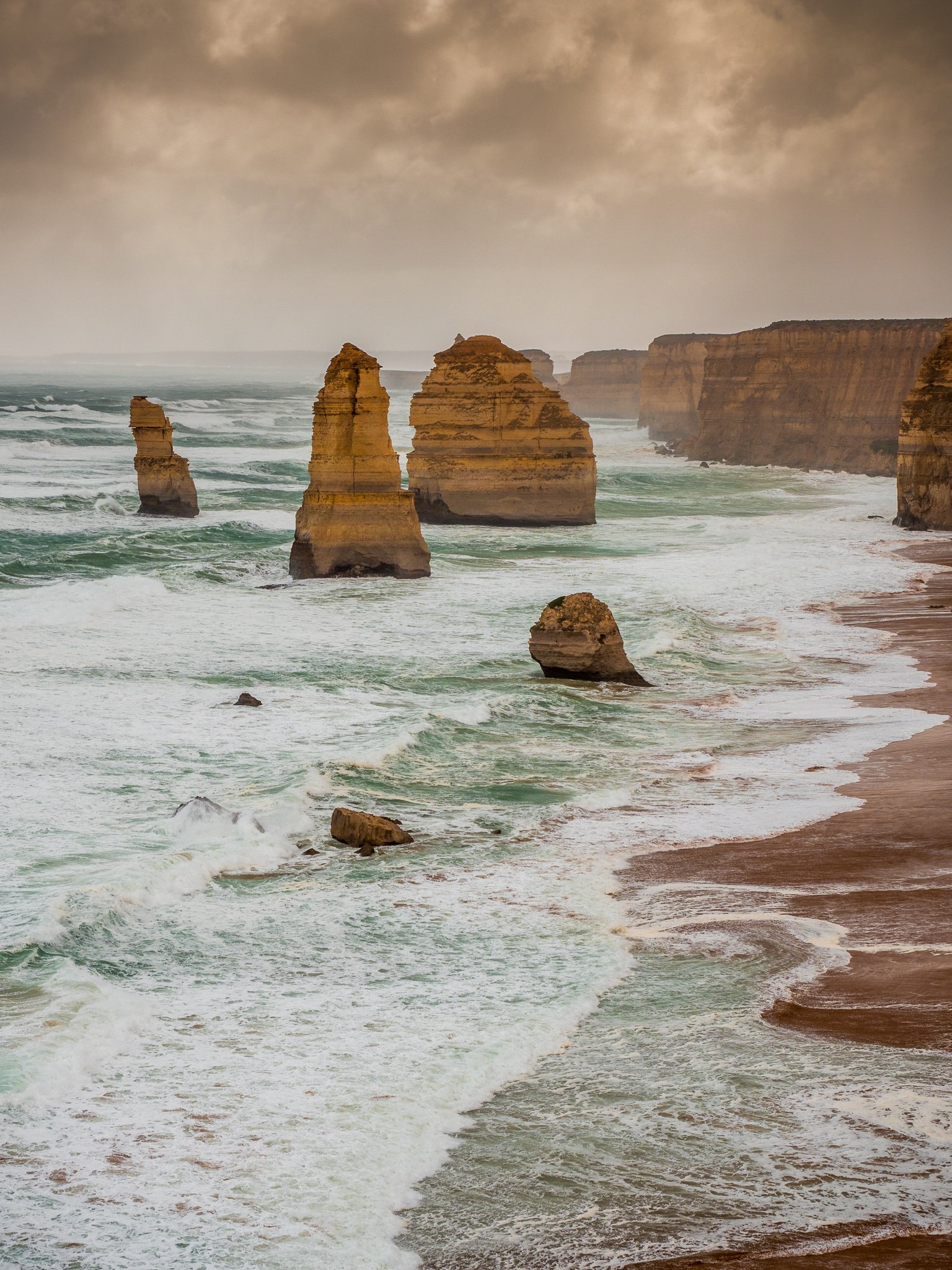
Twelve Apostles
The Twelve Apostles
The jewel in the crown of the Great Ocean Road is the coastline sight of The Twelve Apostles. These rise up from the ocean in defiance to the forces of nature to create a specular sight.
However, you can be too keen to see this sight and miss out on a great experience that will help you appreciate the view of the Twelve Apostles.
Gibson Steps
As you approach the Twelve Apostles from the East, pull over into the Gibson Steps car park. Even if you are approaching from the West, drive past the Twelve Apostles and visit the Gibson Steps first.
Here there is a staircase down to a safe beach, where you can see two of the magnificent Twelve Apostles. You can truly appreciate the size of these rocky islands, towing above you. It is a magnificent view.
Also you get to feel the power of the Southern Ocean, bashing constantly against the cliff face and the Twelve Apostles constantly wearing them down till sometime in the future they will meet their fate and fall into the ocean.
WARNING – Do not venture off the small beach and try to go past the headland. It may look safe but there are many larger waves following that will bash against the cliffs. I was fully aware of this and was drenched unto my knees on a calm day.
Twelve Apostles
Nothing quite prepares you for the view of the Twelve Apostles. First you know there is something special to see here as there is a large car park on the landslide of the Great Ocean Road where there is space for 200 plus cars and large parking spaces for RV’s and Buses. There is a tourist centre where you can buy refreshments, souvenirs and most importantly toilets.
To walk to the Twelve Apostles viewing platforms, there is a walking tunnel underneath the Great Ocean Road. When I first visited this area, there was a car park on the ocean side of the Great Ocean Road and the road itself was a gravel road. How things have changed.
People who visited were mostly born in Australia exploring their country outside the cities by car. Now most of the visitors are from overseas as the region gathers international fame. Bus loads of visitors constantly admire these rock formations. The Victorian government aware of the increased tourism of this area, has erected viewing platforms to protect the cliffs from damage by the thousands of people who view these structures every year.
Even if it is a warm day it is advisable to take a jacket as it is very windy at the cliff face. When I was there it was a fairly gentle breeze at the car park and at the cliff face the wind was 50-80kmh wind gusts. The distance is only 250m difference.
As you walk towards the cliff face you are rewarded with the magnificent view to the west of the main Twelve Apostles. But don’t forget to lock to the east toward Gibsons Steps, where you see the Apostles that towered above you on the Beach now looking small compared to the Apostles that are to the west. Now you can appreciate how large these rock formations stand above the ocean.
No matter the you visit during the day, the Twelve Apostles are always a magnificent view. Though the best time is undoubtedly in the early morning when the light bounces off the rock, showing the full colour of these rock formations.
The wooden pathways give you many differing views of the Twelve Apostles, and it is easy to spend quite a while taking in the scenery. I suggest after taking your first round of pictures, no doubt taken with much enthusiasm; you let the scene soak into your being and then take the views again. Your photos will have more impact.
Otway Ranges
Driving through the windy roads of the Otway Ranges is a breathtaking experience. The drive is not to be taken fast but experienced at leisure. You do not want to be breaking speed records driving through these windy roads.
The vegetation is lush as you would expect in a rainforest. You are spoilt with the magnificence of tall hardwood Mountain Ash Trees and lush fern gullies. The area is still being logged but hopefully the character of the rainforests will not be lost. This area in the 19th Century must have been truly magnificent, with the forests it sustained but now most of the higher reaches in the ranges has been cleared for farmland.
When you drive into Lavers Hill remember to have a rest and a cup of coffee or drink. After, take the road to Beech Forest, which takes you away from Great Ocean Rd. This road takes you to the Otway Fly (where you can walk amongst the tree tops), and access to the walking trails to the waterfalls.
Waterfalls
The real treasure for me are the waterfalls of the Otway Ranges. The easiest to get too are the Hopetoun Falls. These Falls are featured on this page.
You can take different walking trails to the The Beaufort Falls and the Triplet Falls. Both are larger than the Hopetoun Falls. Whatever falls you visit or if you visit all three, be sure that it has rained very recently so you can see them in their splendour. Visiting the easy to get to Hopetoun Falls, will give you an idea of how the falls are flowing and whether to make the effort in seeing the other falls.
Cape Otway and Maits Rest
Maits Rest
As you wind around the Otway Ranges from Apollo Bay to Port Campbell, not far out of Apollo Bay (approx 20Kms) is Maits Rest.
Maits Rest is a lovely pathed walk through the Rainforest of the Otway Ranges. Here you gain an appreciation of the flora and fauna of the region. It is full of bird life and the flora is magnificent. I was delighted to see the small Eastern Yellow Robin’s going about their daily business. Take your time and do not rush, and the freshness and smells of the rainforest will invade your senses, bird life will be seen up close as you quietly become at one with the forest, leaving you feeling invigorate and refreshed.
On leaving Maits Rest it is only a short distance to the turn off to Cape Otway. This is a must see along the Great Ocean Rd. Your drive is to be taken slowly as you pass by magnificent trees and if you are lucky wildlife such as Koala Bears high up in the rainforest trees.
Cape Otway
The drive from the main road to Cape Otway is around 15kms, which takes you form rainforest to open pastures. Finally you arrive at Cape Otway where you need to pay for entrance. Costs $19.50 per adult, $7.50 per child or $49.50 for a family of 2 Adults and up to 4 Children.
At Cape Otway they have a Caffe, which has a number of surprising meals.
From the caffe you can sit outside if weather permits or inside behind the glass. You can enjoy the view of Cape Otway Lighthouse from both of these places.
There are a number of buildings to explore and within each building there is information to read or watch a presentation on a large screen. It is very well setup; a large amount of effort that has gone into preserving the history of the lighthouse and the region. At first I thought that the entry cost was rather step, but by the end I felt it was money well spent.
Cape Otway Lighthouse is the drawcard, and the reason I made the effort to come here. There is something about a lighthouse that fires up the imagination, something that fills one with awe, wonder and a certain amount of romanticism. The path that leads up to the lighthouse increases the wonder. It is bound by railings to allow lighthouse attendants assistance to go back and forth to the lighthouse. It would be a long walk indeed in gale force winds.
The wind increases with every step that you take toward the lighthouse, until you finally find yourself in the sanctity of the resolute lighthouse. As every lighthouse, it has a narrow curved staircase where you lose all sense of direction as you reach for the top. Finally you have a narrow ladder with steps to reach the very top of the lighthouse.
On reaching the top there is a doorway to the outside balcony. An attendant is at the doorway, dressed warmly. She warns you that the winds are quite severe as you walk around the top of the lighthouse. If you think it is windy on this side, it is much worse on the other side. Taking her advice I make my way around the top of the lighthouse and am confronted with 50-70kmh wind gusts. It’s as though I was venturing from one climate to another in just 6 steps.
The views from the lighthouse are wonderful. You can see the ruggedness of the coastline disappearing into the distance and the churning sea crashing against it, in a war of territory that will never cease. The lighthouse offers security, hope and a light that warns and guides souls that venture into the turbulent Southern Ocean.
The lighthouse was decommissioned in January 1994 after being the longest continuous operating lighthouse on the Australian mainland. It has been replaced by a solar light in front of the original lighthouse at 73 m above sea level. GPS systems have taken over from lighthouses, which has made navigation very much safer. But one feels quite nostalgic for the days of the protective lighthouse standing 90m above sea level, and casting a light 48Kms out to sea.
It is a truly a spectacular place to visit.
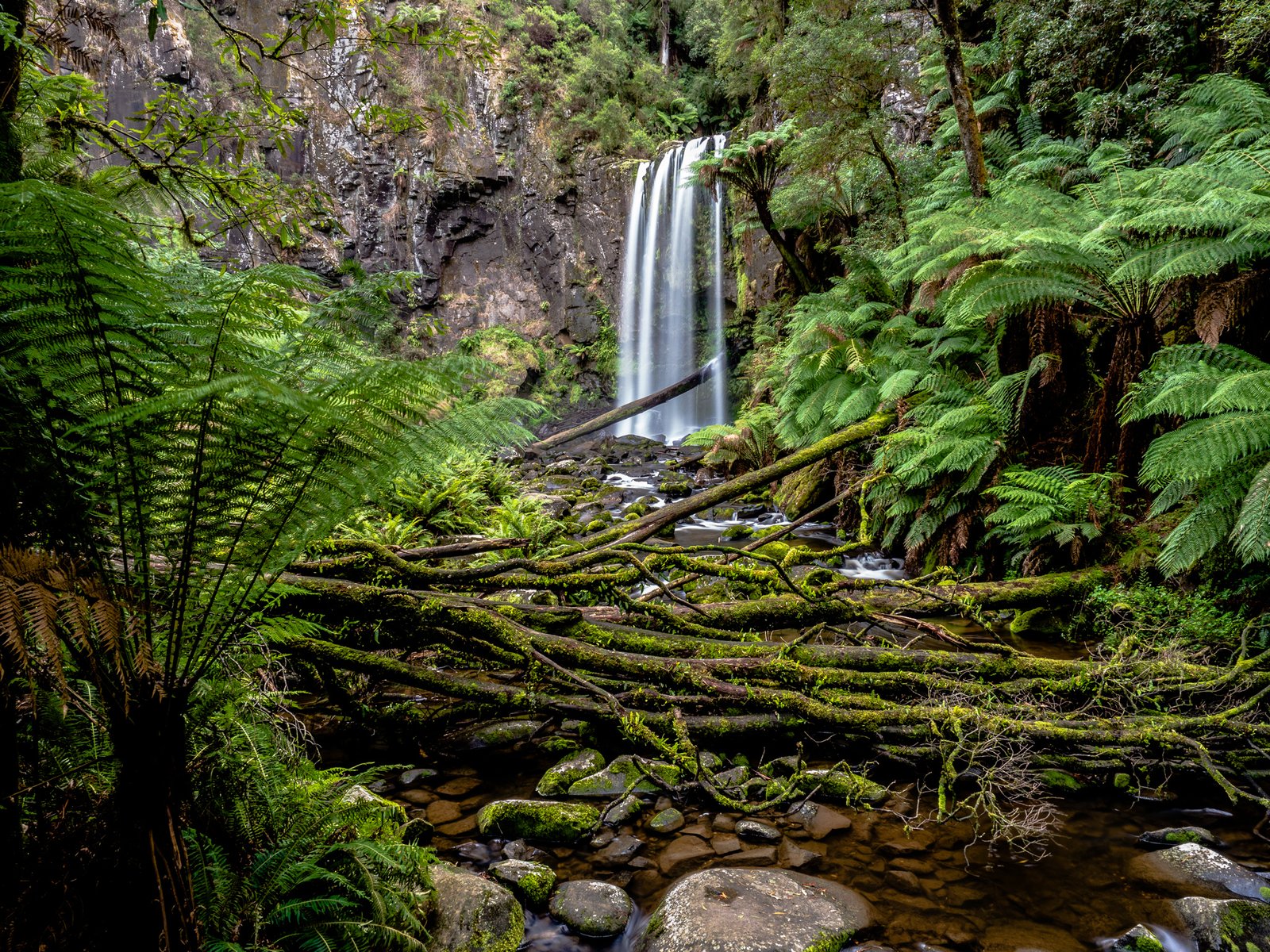
Hopetoun Falls
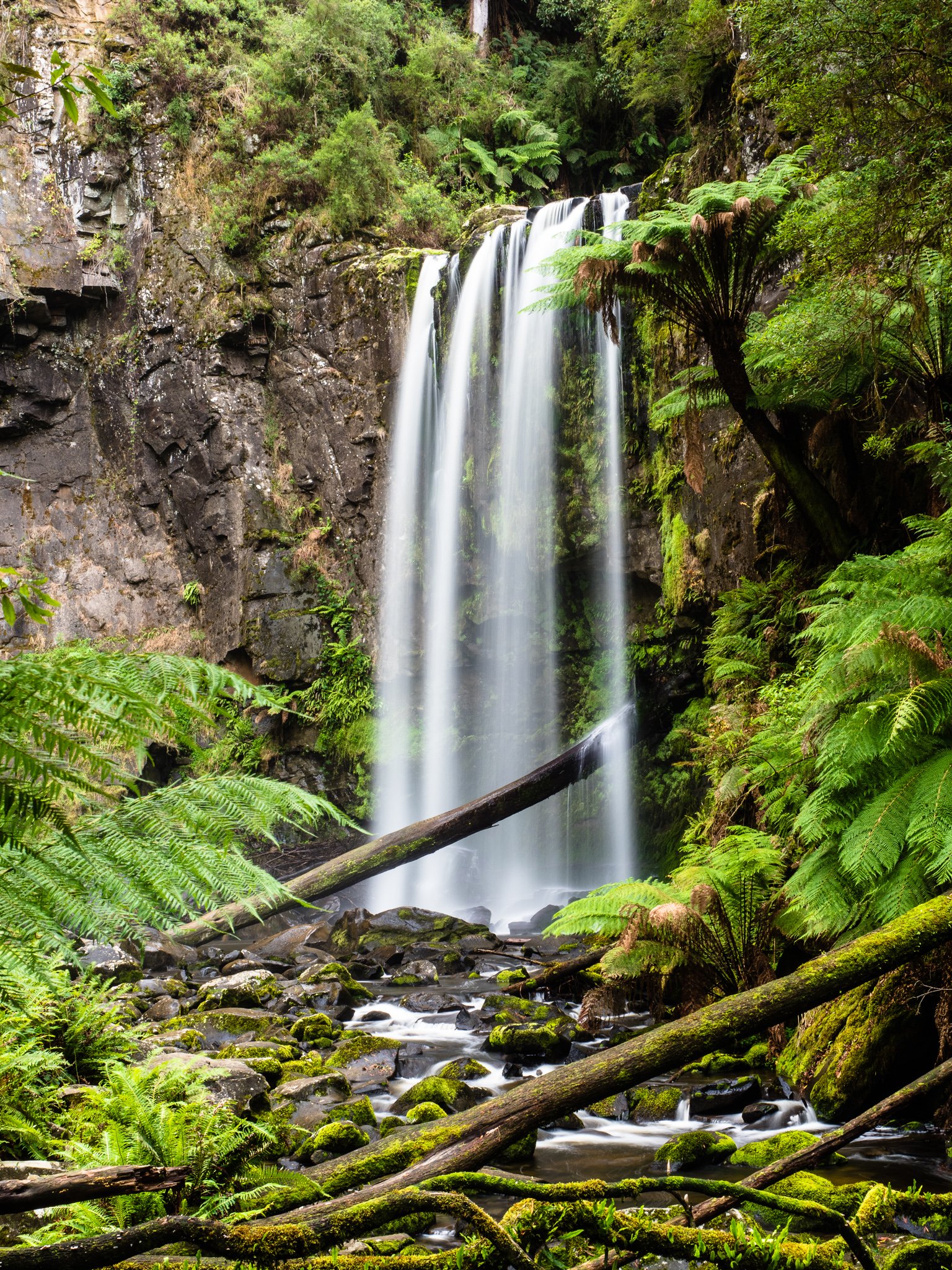
Hopetoun Falls
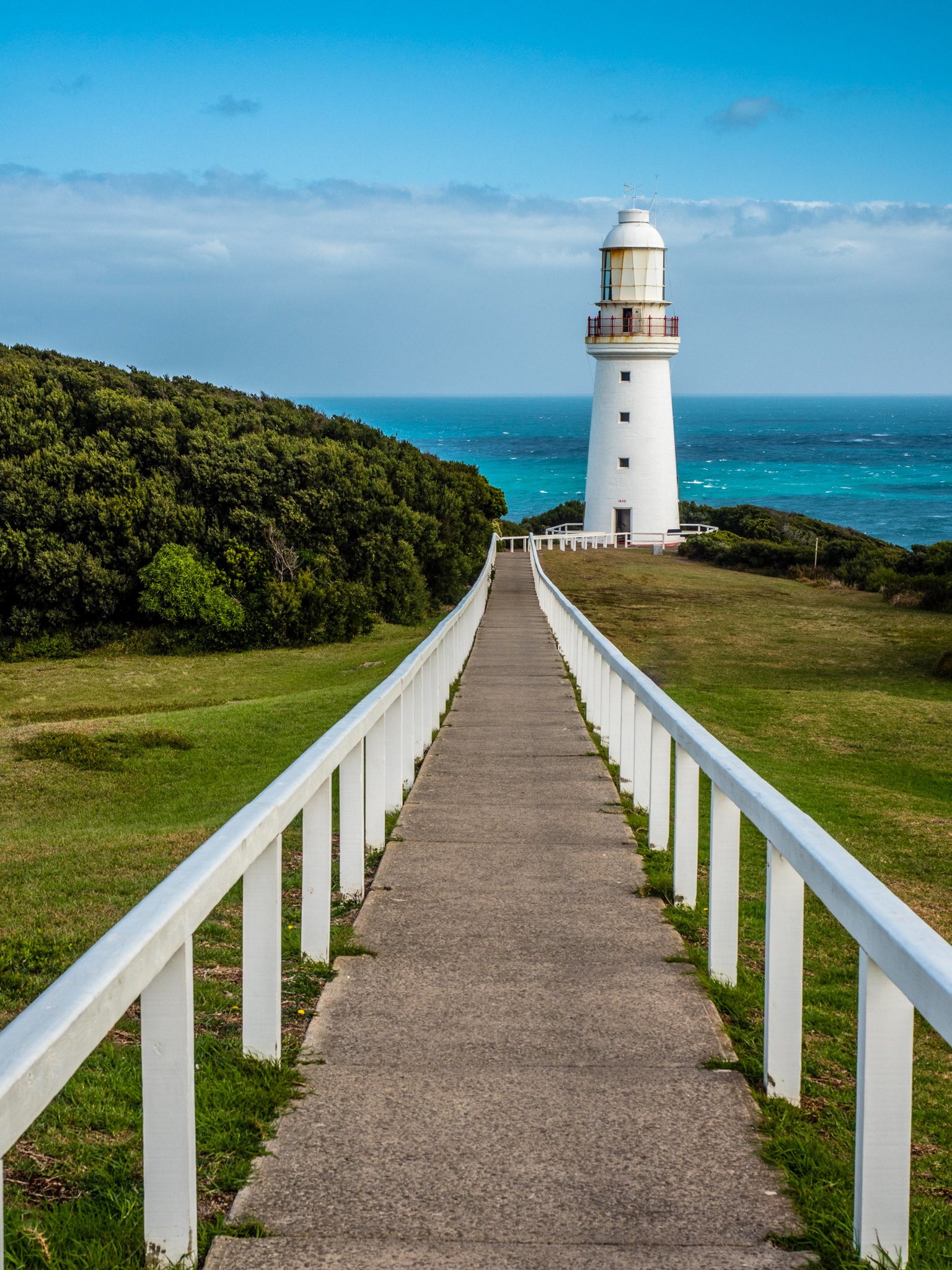
Cape Otway
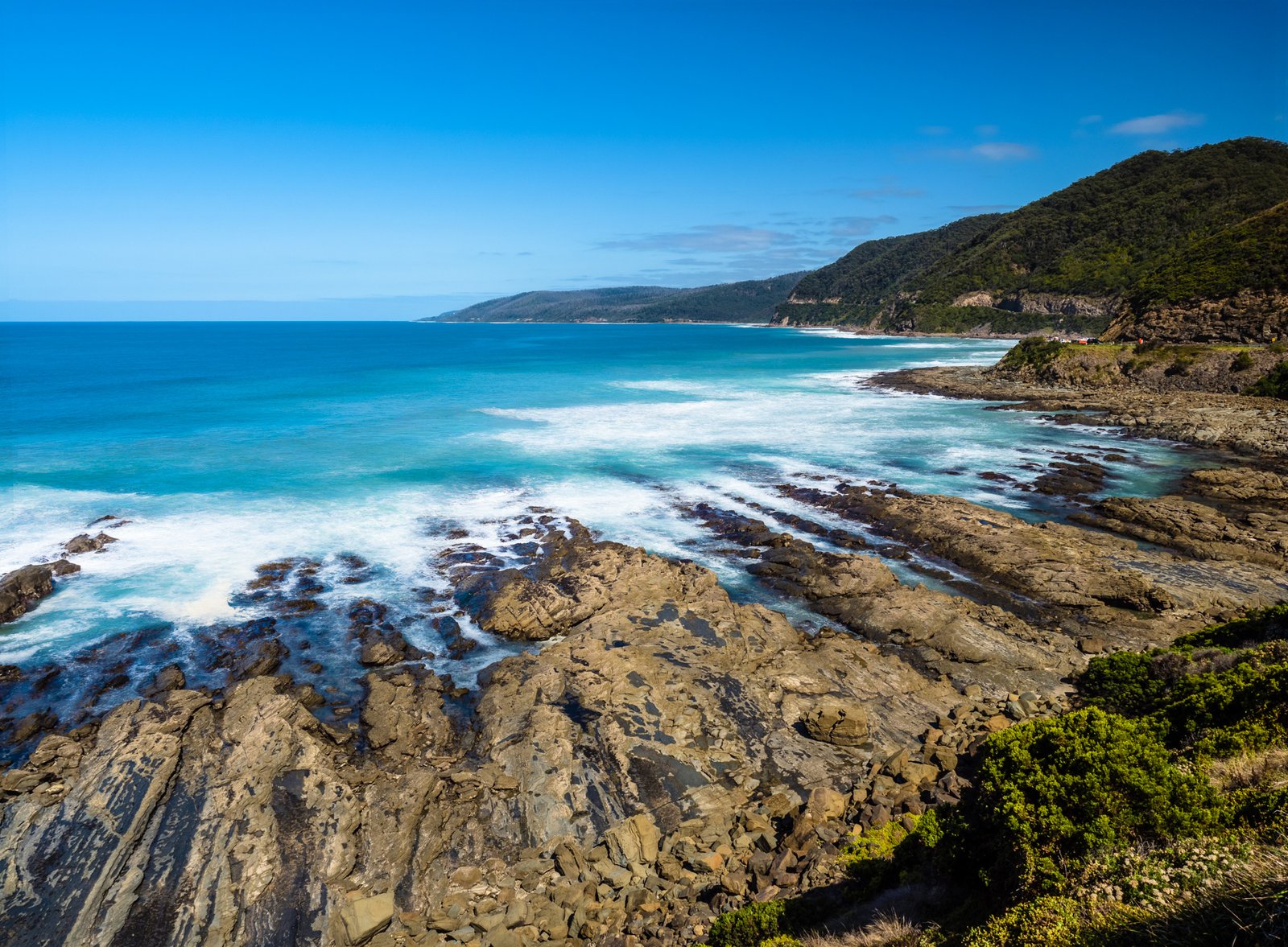
Road to Lorne
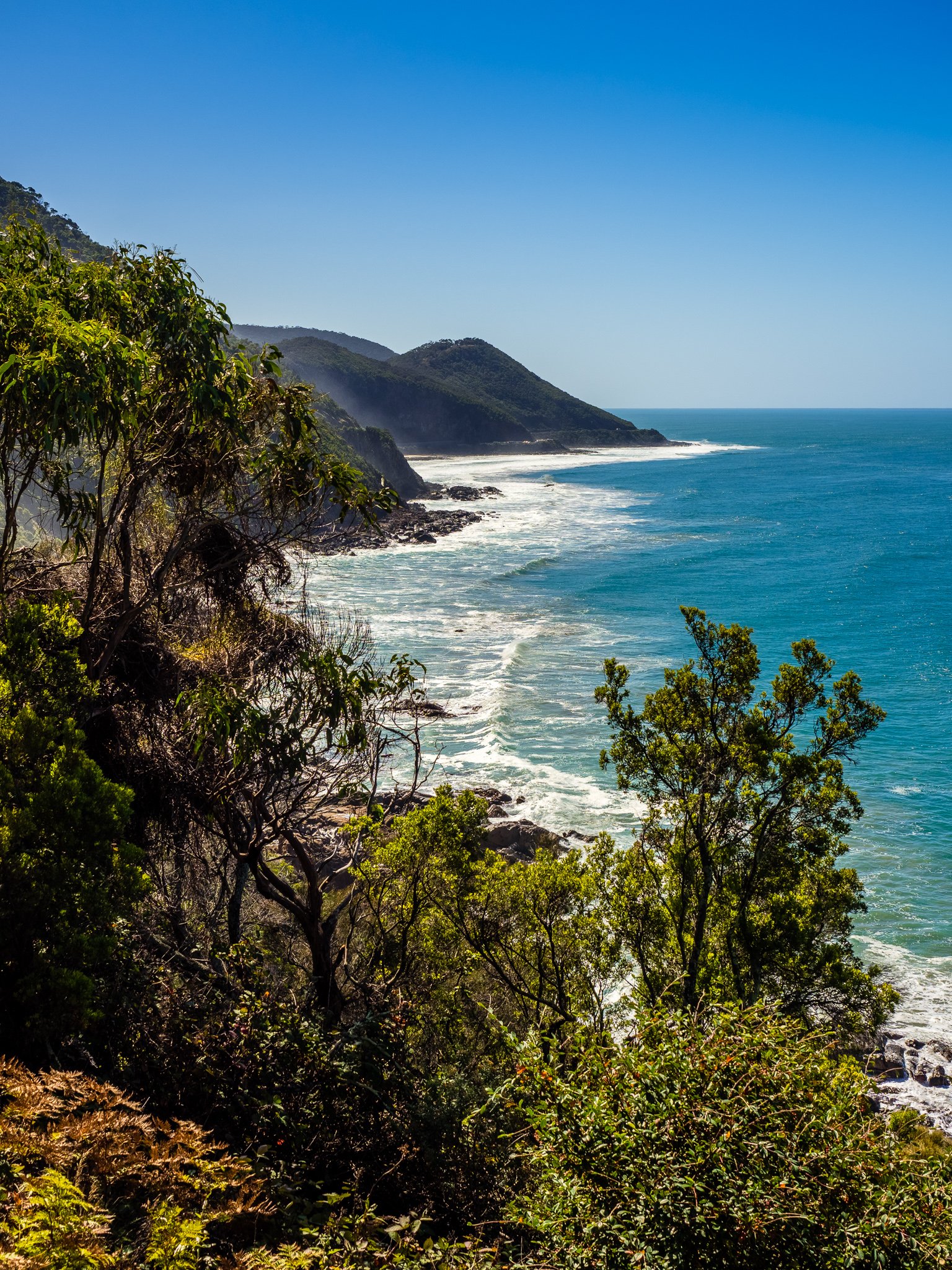
Road to Lorne
Apollo Bay
After the eastward drive through the Otway Ranges, the road winds down to Apollo Bay.
A very popular tourist spot in the summer months, it has a beautiful beach where you can enjoy swimming, fishing or sunbathing.
There is a man made harbour to dock the fishing boats, and tourist boats which give you a close experience to see the Southern Right whales between May and September. A Southern Right female gives birth to one calf every three years, usually born in August. They return to the Antartica to feed once their calves are fully established.
The clifftops or points of bays, give people a great vantage point to see the whales from land.
A great place to have breakfast is in the Main Street at Sandy Feet Health Foods and Cafe. The meals were fantastic.
Another great spot is the very popular Great Ocean Road Brewhouse at the Western end of the Main Street. It serves great food and has over 100 craft beers. It has a dog-friendly beer garden with ocean views and a brewhouse tasting area at the back.
Apollo Bay to Lorne
The road from Apollo Bay to Lorne hugs to the cliff face soon after Skenes Creek, which is a good place to stay if your looking for a quieter holiday outside of Apollo Bay.
The road reaches a height of 100 metres above sea level, providing specular views of the Otway Ranges as it meets the sea. The ranges are covered in thick forest.
There are a few lookouts along the way where you can view the coastline. It is best to keep your eye out for other vehicles, as buses, caravans, cyclists and motorbikes all travel along this specular coastline.
Every so often you plunge down to sea level in small bays, such as Kennett River and Wye River, where there are beaches. Wye River is a great place to stay, and enjoy a meal and break from driving along this coastline.
The road is only 50km long but will take a while to travel as it is limited to 80 kmh, and is often interrupted through roadworks where rockfalls from the cliffs have occurred.
The best view of the coastline is from Mount Defiance Lookout, which is a must stop and take in the views.
It is probably worth going back to Wye River from Lorne to be on the right side of the road to take in the views and be able to safely stop at these lookouts. You surely will want to view this coastline more than once.
Lorne
There is no township along the Great Ocean Road as picturesque as Lorne. This township is so popular that during October to April you will find no parking space in the Main Street. Indeed you will need to book months in advance to have any accommodation in Lorne.
It’s a busy place, with all the Main Street full of cafe and restaurants. People enjoying eating in the outdoors, other people enjoying the vast lawns along the beach, and still other groups of people enjoying sunbathing on the beach and swimming in the protected bay.
I especially like staying at the Beach Huts, which is a colourful collection of units, with their own kitchen and upstairs mezzanine bedroom. It is only a short walk down the street to cafes and restaurants while you car remains safe and sound underneath your unit.
Instead of seagulls pestering you for some (or all) of your meal, white cockatoos have taken over at Lorne. They look for any opportunity to pinch some food. At least they have some manners to let you eat first. The restaurant owners though have to be quick to pack up after you leave, otherwise items on the table may get broken. These birds are very intelligent and even worked out a way to unscrew the tops of sugar dispensers.
Surfers seen their time out on the point of the bay where they enjoy the ride and then walk back along the flat rocky shore to catch another wave off the point.
It truly is a delightful place to be. Even in the winter months this town has a lot to offer, by being a place to stay and explore the stunning coastline. The seas can get quite rough, which is a better time to see the awesome cliffs resisting the relentless pounding of the huge seas. Unlike the Port Campbell National Park cliffs which are made of sandstone, these cliffs are made of extremely solid material, which takes thousands of years to erode instead of decades.
Geelong – Torquay – Beaches
Past Lorne it is not very far to the very popular swimming and surfing beaches of the Great Ocean Road. These are only a short journey from Melbourne, and can be regarded as Geelong’s beaches. In summer these beaches are packed with people enjoying the cooler waters and weather this region has to offer.
The beaches range in activity from boating to surfing and swimming.
There are a number of seaside towns along this stretch including Airleys Inlet, Anglesea, Torquay and one of the beaches is famous throughout the surfing world – Bells’s Beach. It is a major venue for the World Championship of Surfing. Waves on this beach can produce large swells making it the best surfing beach in Victoria.
This section of the Great Ocean Road, is close to the major city of Geelong. Geelong is located inside the protected waters of the Port Phillip Bay, which has a very narrow opening to the Southern Ocean. In fact it is the smallest opening to any major port in the world.
The Southern Ocean and Bass Straight is very unpredictable with huge swells and dangerous weather conditions. Port Phillip Bay is a sanctuary from the often tumultuous journey along the Southern coastline of Australia.
I like to think that the Great Ocean Road journey ends at Queenscliff from where you can take a ferry across the Port Phillip Bay to the eastern side saving you 3-4 hours of travel by road. In fact the Great Ocean Road finishes (or starts) just outside Geelong at Grovedale. At Queenscliff it is a more befitting end to the journey as you can go no further by road, and it ends at the mouth to Port Phillip Bay, with a lighthouse to mark the end of the journey. It’s light shining to welcome all to the Bay, for a journey well travelled.